

Termite Control in Orlando, Florida
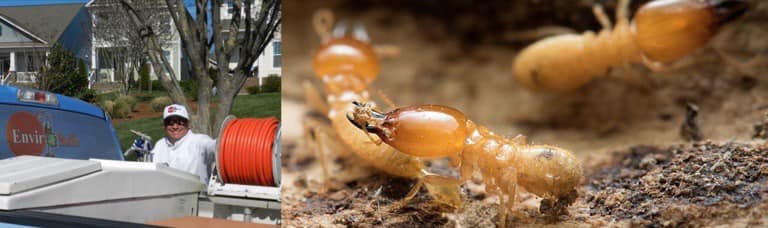
Which Termites You Actually Have in Central Florida
Orlando sits in one of the hardest termite zones in the country, and the species here are not the same ones you read about on national pest control sites.
Native subterranean termites (Reticulitermes) are the workhorse pest of Central Florida. They nest in soil, need moisture, and reach a house through mud tubes over the footing or up through a crack in the slab. They swarm in daylight from roughly mid-April into early May, usually the day after rain.
Formosan subterranean termites are established around Orlando and are a different animal. A mature Formosan colony can run into the millions, and it can build a carton nest inside a wall or a live tree without keeping soil contact. They swarm at dusk in late April and May, and they are the reason a house can go from clean to badly damaged in a couple of seasons.
West Indian drywood termites need no soil at all. They live inside the wood they eat, so they show up in attics, fascia, door frames, furniture and window sills, and they announce themselves with small six-sided frass pellets that look like coffee grounds or sand. Drywood termites are treated completely differently from subterranean termites, which is why identifying the species first is not optional.
Signs of Termites in an Orlando Home
- Mud tubes the width of a pencil running up a block wall, a pier, or the inside of a garage stem wall.
- Frass pellets piling up on a window sill, in a closet, or under a door frame. That is drywood termites, not sawdust.
- Discarded wings in equal-length pairs on a sill or in a spider web after a swarm.
- Swarmers at the windows on a warm April or May afternoon. Termite swarmers have two pairs of wings the same length and a straight waist. Flying ants have a pinched waist and unequal wings.
- Paint that bubbles or a baseboard that gives when you press it. By the time trim sounds hollow, the colony has usually been working for months.
- Damaged wood at a bath trap, an expansion joint, or where irrigation soaks the foundation. Those are the three places we find subterranean activity most often on a Florida slab.
What a Termite Inspection Looks Like on a Florida Slab
Most Orlando homes are slab on grade, so an inspection here is not the crawl space walk it is further north. We work the exterior first: the stem wall, expansion joints, plumbing penetrations, porch slabs, planters and mulch beds pushed against the foundation, and any irrigation head that is keeping the soil at the footing wet.
Inside, we check the bath traps, the garage stem wall, the water heater and washer areas, the base of door frames, and anywhere a previous owner has done a floor or a bathroom over. Then the attic, because that is where drywood termites usually get found first, in the fascia, the truss ends and the sheathing.
You get told what species it is, where it came in, what conducive conditions are helping it, and what each treatment option would actually cost you. If you are buying or selling, that inspection can be issued as a Florida WDO report on FDACS Form 13645.
Your Treatment Options
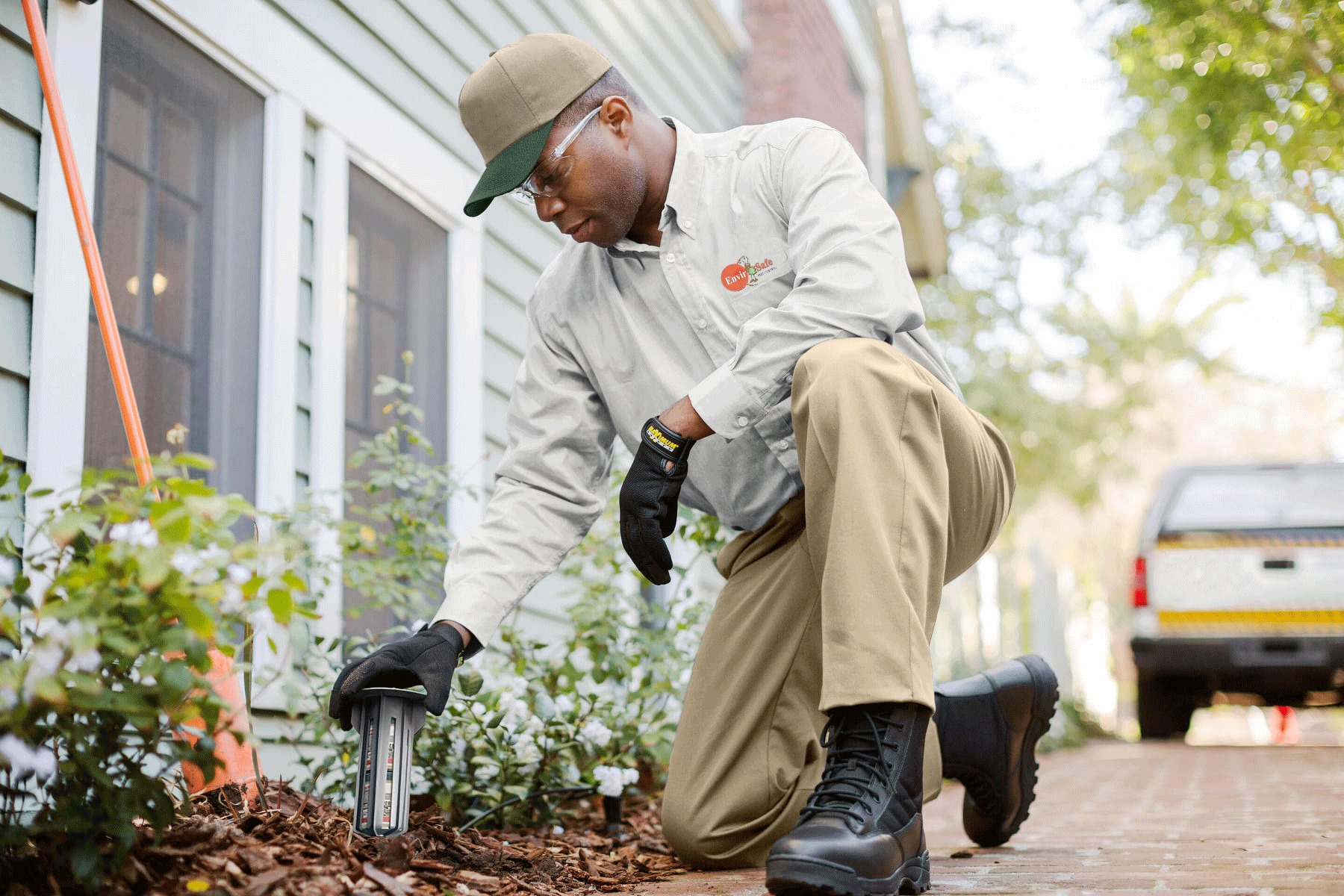
Advance Termite Bait System
The Advance Termite Bait System is the closest thing to non-chemical subterranean termite control we have. In-ground stations go in around the exterior, we monitor them, and when termites are found in a station we introduce the bait, which the workers carry back and share with the colony.
Nothing is drilled through your floor or foundation, nobody has to be inside the house for a service visit, and the disturbance to your landscaping is minimal. The trade-off is time: baiting works at the colony’s pace, not yours, so it is the right choice for prevention and long-term protection rather than for a house that needs the activity stopped this week.
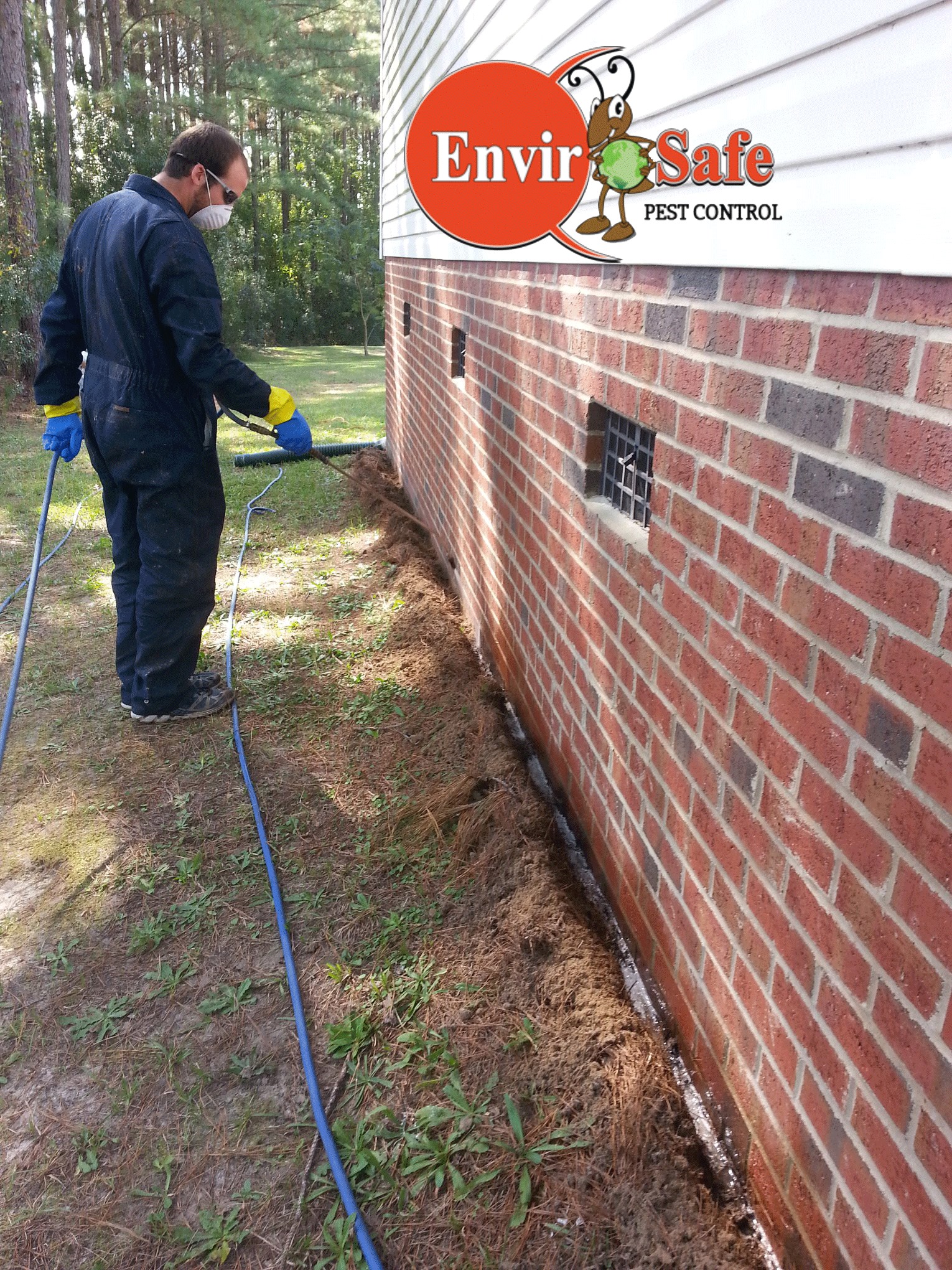
Termidor Liquid Treatment
Termidor is a non-repellent liquid termiticide. Termites cannot see, smell or feel it, so instead of avoiding the treated soil the way they avoid older repellent products, they walk straight through it and carry it back through the colony on contact and by grooming. Typical application is 0.06% fipronil, a lower active-ingredient rate than most alternatives, and it binds tightly to soil rather than moving through it.
We have used Termidor on Orlando and Central Florida properties since 2001. A liquid treatment is what we recommend when there is active subterranean feeding in the structure and you need it stopped now, and it is also what most lenders and buyers want to see documented on a WDO report.
Drywood termites are a separate problem and get a separate answer: localized spot treatment where the galleries are accessible, and whole-structure fumigation only when the infestation is too widespread to reach. We will tell you plainly which one your house needs. There is more detail on all of these on our termite treatment page.
After the Treatment
Termite work does not end on the day of the application. A liquid barrier and a bait system both carry an annual renewal, and that renewal buys you a re-inspection, not just a piece of paper. In Central Florida, where termites are active year round and there is no cold season to slow them down, that yearly look is the part that actually protects the house.
We are owner-operated. The person who inspects your home is the person you call back, and we would rather tell you that you do not need a treatment than sell you one you do not.
Call 407-580-7124 for a termite inspection in Orlando and Central Florida.

Satisfaction Guaranteed
Envirosafe Pest Control of Orlando has been treating Central Florida termites for over 30 years, with organic and low-impact methods wherever they will do the job. If a treatment will not work, we will say so.