

Termite Treatment in Orlando, Florida
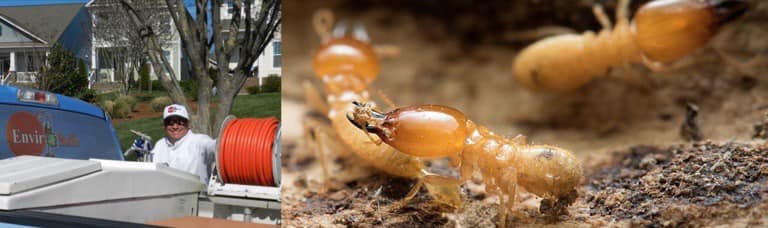
How Termite Treatment Actually Works in Central Florida
There is no single termite treatment. What your house needs depends on three things: the species, how the house is built, and how far the infestation has already gone. A drywood termite job in an attic and a Formosan job under a slab have almost nothing in common, and anyone who quotes you a price before identifying which one you have is guessing.
Below is what each of the treatments we perform actually involves, how long it takes, and what you can expect afterward. If you are still trying to work out what you have, start with termite identification and inspection.
Liquid Barrier Treatment for Subterranean Termites
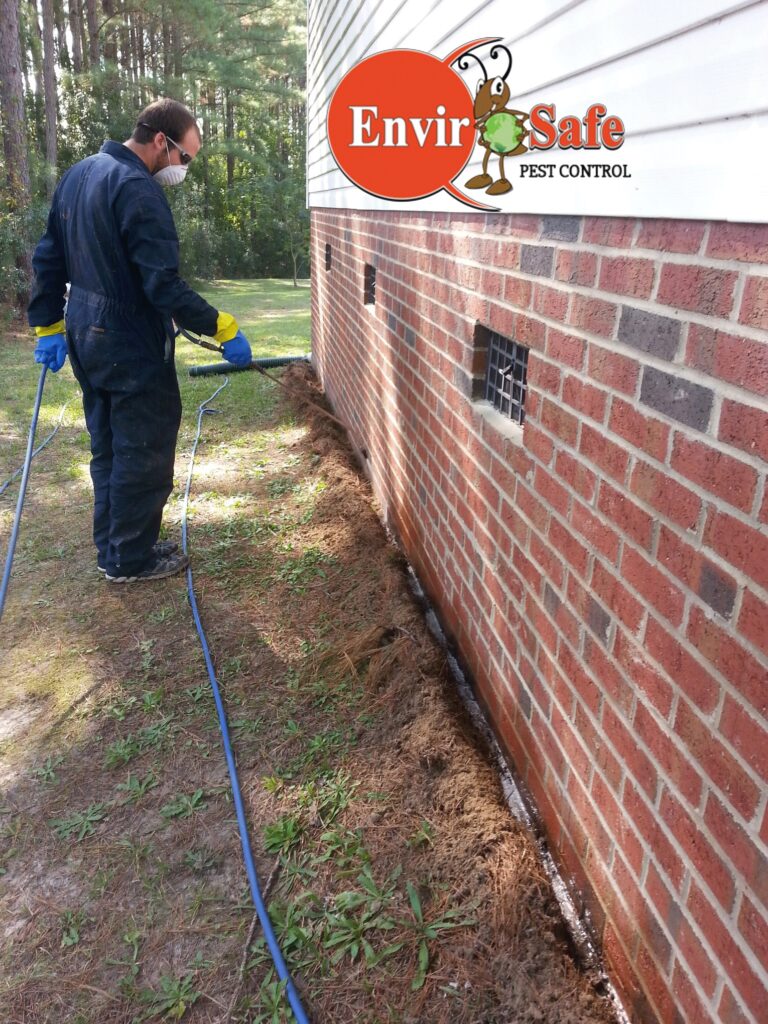
A liquid treatment puts a continuous treated zone in the soil between the colony and your house. On an Orlando slab that means trenching and rodding the soil along the exterior foundation, and drilling through the slab at the specific interior points that matter: bath traps, expansion joints, plumbing penetrations, the garage stem wall and any porch or patio slab poured against the house.
Time on site: most single-family homes are a half day to a full day, depending on the linear footage and how much of the perimeter is under concrete or pavers. Living in the house: you can be home; the drilled holes are patched before we leave. What you will notice afterward: more termite activity in the first week or two, not less. That is normal. Termites carry a non-repellent product back through the colony, so the die-off is gradual rather than instant.
Why We Use Termidor
Older termiticides were repellent. Termites detected the treated soil and simply went around it, which is why so many houses treated in the 1980s and 1990s were re-infested through a gap the applicator could not see.
Termidor is non-repellent. Termites cannot see, smell or feel fipronil, so they forage straight through the treated zone, pick it up on contact, and pass it to nestmates through grooming and feeding. The label rate is 0.06% active ingredient, lower than most alternatives, and it binds to soil particles rather than leaching down toward groundwater, which matters more in Florida sand than almost anywhere else.
We have used it on Central Florida properties since 2001 and it is what we reach for when there is confirmed active subterranean feeding in the structure.
Advance Bait Stations for Long-Term Protection
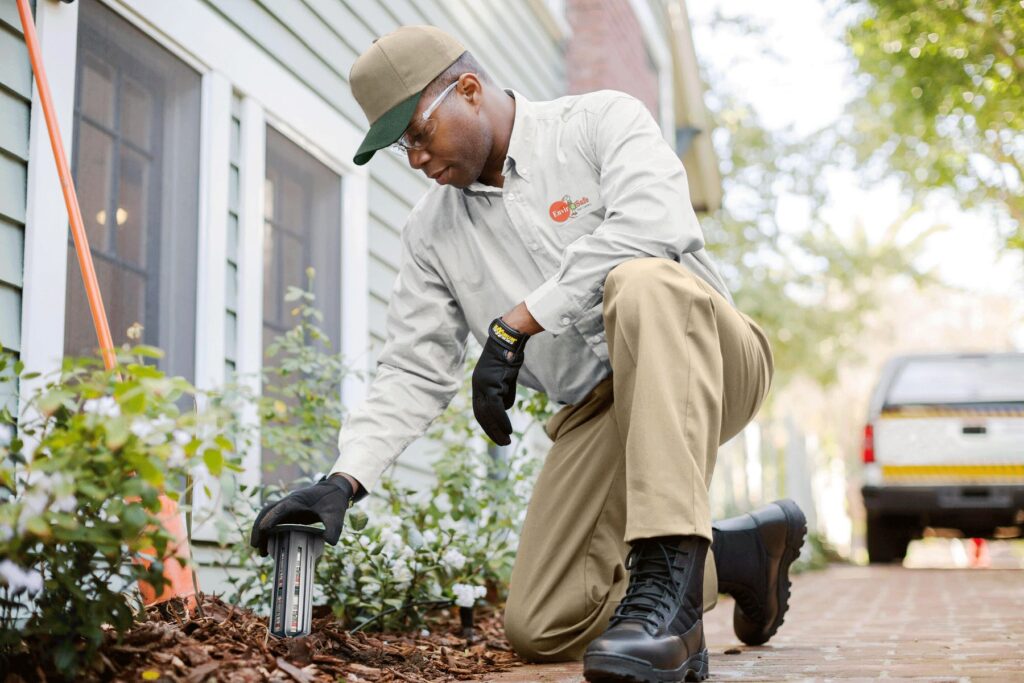
Baiting takes the opposite approach. In-ground stations are installed around the exterior at intervals, monitored on a schedule, and loaded with bait once termites are found feeding in a station. Workers carry it back and it moves through the colony from there.
Time on site: installation is usually two to three hours. Disturbance: almost none. No drilling into your floors, no need for anyone to be home for a monitoring visit, minimal impact on landscaping. Speed: this is the slow option by design. Baiting is the right answer for prevention, for houses where drilling is impractical, and for owners who want the least chemical in the ground. It is not the right answer on its own when termites are already eating a load-bearing member.
Drywood Termites: Spot Treatment and Fumigation
Drywood termites never touch soil, so a soil barrier does nothing to them. If the galleries are accessible, in fascia, a door frame, exposed rafters or furniture, we treat them directly: drill the gallery, inject, and seal. That is a same-day job and you stay in the house.
Whole-structure fumigation is the answer only when the infestation is scattered through inaccessible framing and there is no way to reach every colony. It means tenting, vacating the house for two to three nights, bagging food, and coordinating with a licensed fumigator. It is expensive and disruptive, and we will tell you honestly when a house genuinely needs it and when it does not. Plenty of Orlando homes get quoted a tent when two spot treatments would have done it.
What Drives the Price
Linear footage of foundation, how much of the perimeter is buried under concrete, pavers or a pool deck, the species involved, whether interior drilling is needed, and whether there is existing damage that has to be documented. Anything else is a guess. We inspect first and quote from what is actually there.
Renewal and Warranty
Both liquid and bait treatments carry an annual renewal. That renewal is what pays for the yearly re-inspection, and in a climate where termites forage twelve months a year with no cold season to slow them down, the re-inspection is the part that keeps a house protected. Skipping it to save the renewal fee is how people end up paying for the treatment twice.
Call 407-580-7124 for a termite treatment quote in Orlando and Central Florida.

Satisfaction Guaranteed
Envirosafe Pest Control of Orlando is owner-operated. The person who inspects your home is the same person you call when you have a question about the treatment.